The Cinnamon Coast: The Spice That Drew Empires to Sri Lanka
Discover how Ceylon cinnamon shaped Sri Lanka’s southern coast, drawing merchants and colonial empires across the Indian Ocean. From ancient spice routes to the historic ramparts of Galle Fort, explore centuries of maritime heritage from a unique perspective – the sea, with Sail Lanka.
Before Sri Lanka’s southern coast became known for beaches and surf, it was the source of one of the world’s most coveted spices. Cinnamon drew merchants, colonial powers and centuries of conflict to these shores, and left a history still visible from the sea.
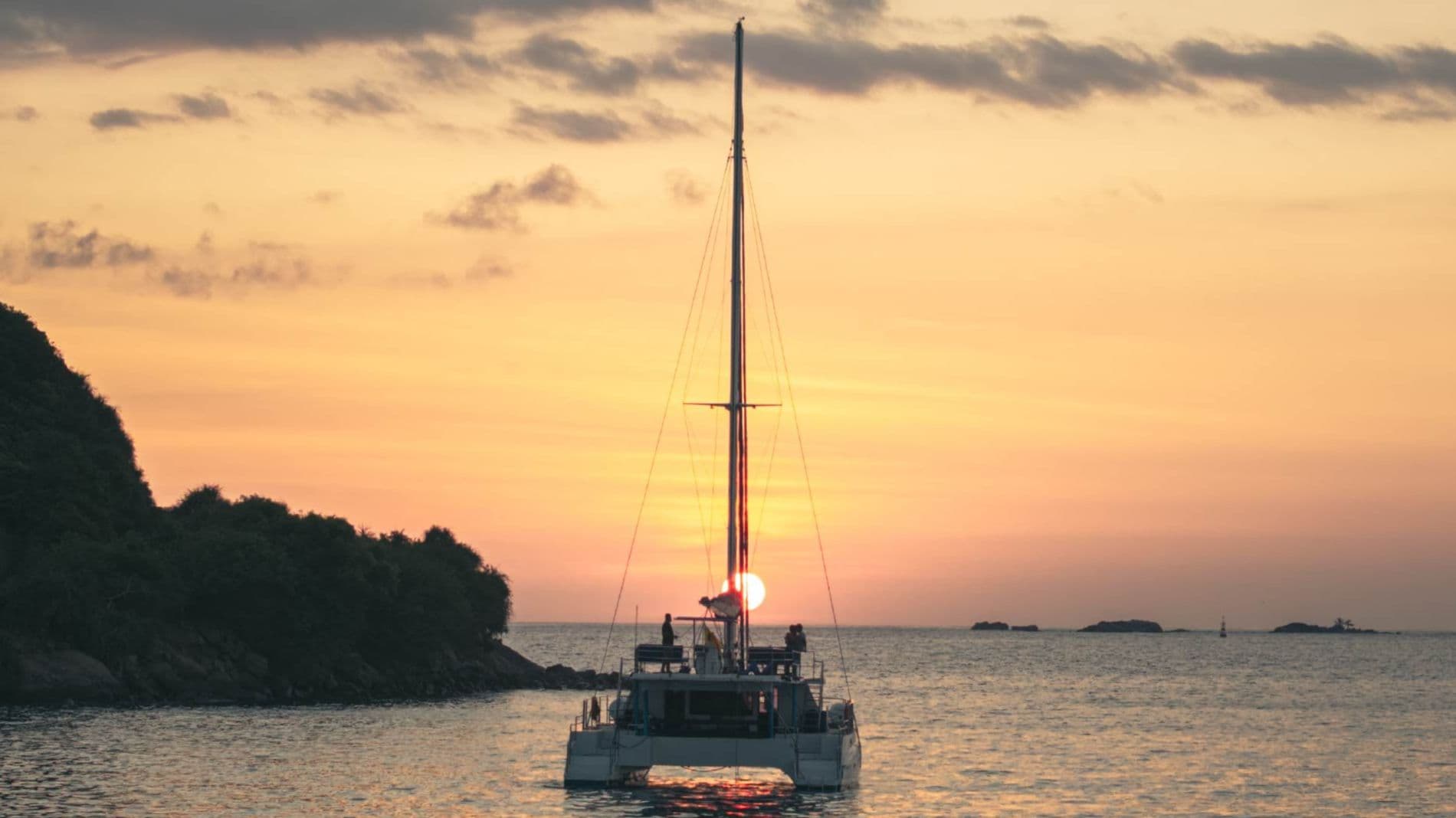
Sail Lanka operates along this same stretch of coast today, where the history of cinnamon, trade and empire is still written into the landscape.
The Greek historian Herodotus, writing around 430 BCE, recorded an extraordinary explanation for its origins. Enormous birds, he was told, carried cinnamon sticks to nests built high on inaccessible cliffs. Traders left heavy pieces of meat below; the birds carried them upwards, the nests collapsed under the weight, and the cinnamon fell to the ground.
It was a wonderful story. It was also, as the Roman naturalist Pliny the Elder later argued, a fabrication - one of several tales that helped increase the price of a rare and poorly understood commodity.
Behind the mythology was a real place. True cinnamon, Cinnamomum verum, came from Sri Lanka, particularly the forests of its southwestern wet zone.
The Scent the World Chased
Other plants known as cinnamon or cassia grew elsewhere in Asia, but the thin, delicate bark prized as Ceylon cinnamon originated here.
For centuries, it travelled west through a network of Indian Ocean merchants. Arab, Persian and Egyptian traders carried it between ports, each link adding value, and sometimes mythology, before it reached Mediterranean buyers who knew little about where it had been harvested.
By the late 13th century, the truth was becoming clearer. The Arabic geographer al-Qazwini identified Sri Lanka, then widely known as Serendib, as a source of cinnamon.
When the Moroccan traveller Ibn Battuta visited the island in 1344, he described cinnamon branches being carried down from the hills by seasonal rains and gathering along the coast. His account may have been embellished, but by then Sri Lanka’s connection to cinnamon was no longer entirely secret.
What remained beyond European reach was direct access to the source - and control of the trade.
A New Route, and an Empire’s Appetite
Around 1505, a Portuguese fleet commanded by Lourenço de Almeida reached Sri Lanka’s western coast.
The Portuguese had not discovered an unknown island or an unknown spice. They already knew that Ceylon produced valuable cinnamon and had encountered Sri Lankan goods through traders in India.
What changed was their ability to reach the island directly by sea.
The Portuguese established relations with the Kingdom of Kotte and departed with a substantial cargo of cinnamon. In 1518, they constructed a fortress at Colombo. Trade and diplomacy gradually gave way to military and political intervention.
Cinnamon became one of the central economic motives behind Portuguese expansion, alongside elephants, gemstones, areca nut, strategic harbours and control of Indian Ocean shipping routes.
When the Dutch East India Company displaced the Portuguese in the 17th century, it pursued the trade with even greater intensity. The Dutch sought to control where cinnamon was harvested, who could peel it, how much was produced and where it could be sold.
Under the VOC, cinnamon was more than an agricultural product. It was a protected commercial resource, regulated through forts, government departments, labour obligations and military power.
The Coast That Paid the Price
The wealth of the cinnamon trade came at a cost to the people who produced it.
Much of the harvesting and peeling was carried out by the Salagama community, known as the Chalias in many colonial records. Their obligations predated European rule: the Kingdom of Kotte had already treated cinnamon as a royal monopoly and required designated communities to deliver bark as a form of service or tax.
The Portuguese and Dutch expanded and hardened that system.
Colonial authorities imposed production quotas, organised long expeditions into the forests and punished those who failed to supply the required amount. Yet the peelers were not simply workers at the bottom of the trade. They held the specialist knowledge needed to identify the right trees, remove the bark without ruining it and produce the fine, layered quills for which Ceylon cinnamon became famous.
They also resisted. Some abandoned their work or fled into territory controlled by the Kingdom of Kandy. At times, the VOC was forced to offer concessions to bring them back.
The coast’s beauty and its hardship were never separate stories. They were the same story, seen from opposite ends of the trade.
Galle: The Fortress Behind the Trade
If cinnamon was one of the reasons European powers fought for Sri Lanka’s coast, Galle was where that struggle took physical form.
The Portuguese constructed a fort there in the late 16th century. The Dutch captured it in 1640 and rebuilt its defences into the sprawling walled town that survives today.
Now a UNESCO World Heritage Site, Galle Fort is one of the finest surviving fortified European towns in South and Southeast Asia. But its ramparts were not built as a picturesque backdrop.
They protected a strategic harbour, a military garrison, a colonial administration and warehouses filled with cinnamon, gemstones, spices and other valuable cargo.
Approach the ramparts from the water today, and the fortress appears much as it was intended to: a wall of authority facing the sea. The Dutch Reformed Church rises inside the town, while the lighthouse at Point Utrecht,a later British addition, marks the edge of the old defensive landscape.
The fort was the armoured end of a supply chain connecting Sri Lanka’s forests and cinnamon peelers with merchants, ships, warehouses and consumers across the world.
A Coast Worth Understanding
It is tempting, arriving in southern Sri Lanka today, to see only beaches, surf breaks and sunset views from Galle’s ramparts.
But this coast was never simply scenery.
For centuries, cinnamon helped make Sri Lanka’s southwest one of the Indian Ocean’s most valuable and contested regions. Merchants came to trade. European companies came to monopolise. Forts were built, kingdoms were drawn into wars and alliances, and generations of workers extracted wealth from the forests.
To travel here without understanding that history is to see the coast, but miss much of the story that shaped it.
Sail Lanka’s southern coast experiences are designed to close that gap.
Cinnamon Coast journeys connect the landscape with the trade that transformed it. Voyage to Galle Fort and Fort & Sail approach the ramparts as ships once did. From the sea, with the fortress slowly appearing across the water.
The Southern Cinnamon Coast Sail also offers overnight voyages connecting Tangalle, Mirissa and Galle, following the coastline that once carried cinnamon to markets across the Indian Ocean. Private South Coast sailings are available for those wanting to explore at their own pace.
Explore Sail Lanka’s southern coast journeys at saillanka.lk/journeys